We have tried to summarise the routes currently open to foreigners who want to relocate to Mauritius, whether to retire, work, invest, start a business or buy property, along with the tax position that goes with each. This reflects the 2026-2027 Finance Bill.
The Budget Speech for 2026-2027 has now been promulgated into law, and we wanted to set out plainly what this means for anyone planning a move to Mauritius, whether through retirement, professional work, remote work, starting a business or buying property. A few routes have changed in ways worth knowing about. The investor permit now sits at a single USD 100,000 threshold. The Golden Visa is written into law. The property duty surcharge on foreigners is repealed, and a new 35% income tax band applies above MUR 12 million. We have also kept these changes alongside the existing rules that still apply, so this reads as one overview.
Residency & investment: the new measures
These are the measures enacted this year. The rest of this guide sets out the existing framework, which continues unchanged.
- Investor Permit. The USD 50,000 option is removed. A single minimum investment of USD 100,000 applies, with turnover of MUR 5 million from year three and MUR 8 million from year five for renewal.
- Self-Employed Permit. Renewal turnover targets set at MUR 2 million from year three and MUR 3 million from year five.
- Professional Permit. Minimum monthly basic salary set at MUR 50,000, with ProPass and Expert Pass consolidated into one Professional category.
- Family Occupation Permit. Abolished.
- Technical Occupation Permit. A new category created for workers under a Government-to-Government framework. Starts on a date to be fixed by Proclamation.
- Golden Visa. Written into the EDB Act as a category (USD 1 million investment) and given the same remittance-based income tax treatment as the Premium Visa.
- Digital Travel Authorisation and Student Employment Permit. Both enacted. Each starts on a date to be fixed by Proclamation.
- Income tax. A new 35% band on chargeable income above MUR 12 million, from the income year starting 1 July 2026. The Fair Share Contribution on individuals is replaced by this band, and dividends from resident companies stay exempt.
- Property duties. The 10% surcharge that applied to non-citizens is repealed, so registration duty and land transfer tax return to 5%. A separate new 10% duty applies on the sale of a G+2 apartment on State Land to a non-citizen, paid by the seller.
- Other tax. A new 4-year income tax exemption for a qualifying foreign employee of a solar photovoltaic manufacturer, and a higher tax-free retirement lump sum of MUR 3.5 million.
Retired Non-Citizen Residence Permit
Commonly called the Retirement Permit or Mauritius Retirement Visa, this is the main route for retirees choosing to relocate to Mauritius. It is open to non-citizens aged 50 and above and is valid for 10 years from the date of issue.
- The holder transfers an initial sum of at least USD 2,000 into a local bank within 60 days of issue, then either USD 24,000 each year or USD 2,000 each month.
- There is no minimum stay requirement.
- The holder may invest in a Mauritian business but may not work in it or draw a salary from it. Remote work is allowed.
No changes to the Retirement Permit were made this year.
Occupation Permit
The Occupation Permit is a combined work and residence permit, valid for up to 10 years. For those looking to relocate to Mauritius and work here, it has three main categories, Investor, Self-Employed and Professional, plus a Short-Term option. The permit criteria were revised this year and now sit in the Economic Development Board Act, as set out below.
Investor Permit
A single investment threshold now applies, valid for 10 years and renewable:
- Initial investment of USD 100,000. The investor provides a certified bank statement showing sufficient funds and a written undertaking to transfer the USD 100,000 into a Mauritian bank account within 60 days of receiving the permit. The USD 50,000 option that existed previously has been removed.
- Renewal. A minimum turnover of MUR 5 million from the third year of registration, and MUR 8 million from the fifth year for renewal.
- The Innovative Start-Up route remains available, for an innovative project submitted to the Economic Development Board or registration with an incubator accredited by the Mauritius Research and Innovation Council, subject to progress and development reporting.
Self-Employed Permit
For a self-employed person engaged exclusively in the services sector, valid for 10 years and renewable:
- Initial investment of USD 50,000, a certified bank statement showing proof of funds, a written undertaking to transfer the funds within 60 days, and at least 3 letters of intent, including 2 from potential local clients.
- Renewal. A minimum turnover of MUR 2 million from the third year of registration, and MUR 3 million from the fifth year for renewal.
Professional Permit
- Minimum monthly basic salary of MUR 50,000. This applies across all sectors. The former ProPass and Expert Pass sub-categories are consolidated into the single Professional category.
- The permit is valid for the period of the employment contract or 10 years from issue, whichever is shorter.
- A professional who already holds a permit has their first renewal assessed under the criteria that applied before this change, as a transitional measure.
Young Professional Permit
Unchanged. Open to a foreign student who has completed at least an undergraduate degree at a local tertiary institution recognised by the Higher Education Commission, or who holds an equivalent internationally recognised professional certification dispensed by a registered institution in Mauritius. Valid for the period of the employment contract or 3 years from issue, whichever is shorter.
Technical Occupation Permit
A new category for a contractual or technical worker under an approved Government-to-Government framework. Valid for an initial 3 years, not exceeding the employment contract, and renewable. A holder may earn below the MUR 50,000 professional salary floor, provided the salary meets the applicable minimum wage and the employer provides proof of suitable accommodation.
Short-Term Occupation Permit
For working in Mauritius for a period not exceeding 9 months, across any occupation permit category. It can be extended once for up to 3 months, provided the application is made at least 15 days before expiry.
Premium Visa
The Premium Visa is for non-citizens who want to relocate to Mauritius while earning their income from outside the country, such as remote workers, long-stay visitors and retirees. It is issued for a year and is renewable, and the main applicant does not enter the local labour market. Its tax appeal is the remittance basis, set out in the Income Tax section below, which is now shared with the Golden Visa.
Golden Visa
A new route aimed at high-value investors ready to relocate to Mauritius, now written into law.
- The applicant invests an aggregate of at least USD 1 million within 12 months of the visa being issued, in a business activity other than the acquisition of residential property under the EDB schemes.
- Golden Visa holders receive the same remittance-based income tax treatment as Premium Visa holders (see the Income Tax section).
The Budget also described the Golden Visa as offering a stay of up to 2 years renewable, eligibility to apply for permanent residence, and fast processing of domestic worker permits. More on the Golden Visa here.
A related AI City Scheme has also been created at EDB level, offering AI founders who invest at least USD 1 million in expedited permits, property access and fiscal incentives.
Permanent Residence Permit
A non-citizen may be issued a Permanent Residence Permit (PRP) if they meet one of the criteria below.
By category
- Retired. Held a retired non-citizen Residence Permit for at least 5 years, having transferred a total of at least USD 200,000 to Mauritius over those years.
- Investor. Held an investor Occupation Permit for at least 5 years, with a minimum annual turnover of at least MUR 15 million in each of the 5 preceding years, or an aggregate of MUR 75 million.
- Professional. Held a professional Occupation Permit or a valid work permit for at least 5 years, earning a minimum monthly basic salary of MUR 400,000 for the 5 consecutive years immediately before the application.
- Self-employed. Held a self-employed Occupation Permit for at least 5 years, with an annual business income of at least MUR 3 million in each of the 5 preceding years, or an aggregate of MUR 15 million.
Other routes and validity
- The spouse of an eligible person, a parent or dependent child up to age 24, up to 2 other dependents, and members of the Mauritian Diaspora under the Mauritian Diaspora Scheme.
- Buying property through an EDB-approved scheme at a minimum price of USD 375,000 also grants PRP eligibility (see Property below).
Travel and entry
A Digital Travel Authorisation is now written into the Immigration Act. Arriving non-citizens will need to hold one, applied for online before travelling to Mauritius, on payment of a fee, with the Minister able to exempt some categories of traveller. Residence permits may also be issued in digital, card or paper format.
Buying or selling property
Registration duty and land transfer tax
Registration duty and land transfer tax for non-citizens return to 5%. The 2025-2026 measure that had doubled these to 10% for non-citizens is repealed by the Finance Bill, so both revert to the standard 5%.
| Transaction type | Rate now |
|---|---|
| Registration duty (non-citizens) | 5% |
| Land transfer tax (non-citizens) | 5% |
G+2 apartments on State Land
Foreigners can no longer acquire apartments on State Land or Pas Géométriques under new G+2 projects. Existing approved projects and current owners are not affected and can still sell such apartments.
A new 10% duty applies on the sale of such an apartment to a non-citizen, paid by the seller. It does not apply where a presale agreement was drawn up and signed before a notary before 19 June 2026.
Where foreigners can buy
- For foreigners who want to relocate to Mauritius and buy property, purchases are possible through EDB-approved schemes, namely PDS, IRS, RES, Smart City and IHS. A purchase at a minimum price of USD 375,000 grants eligibility for a Permanent Residence Permit. More on buying property here.
- Non-citizens holding a Residence Permit may not buy residential property outside EDB-approved schemes. The December 2023 provision that allowed this above USD 500,000 has been removed.
- Non-citizens may not acquire apartments in buildings of at least 2 floors above ground floor built on State Land or Pas Géométriques.
No capital gains, property or wealth tax
Mauritius continues to levy no capital gains tax, no property tax and no wealth tax.
Income tax
New personal income tax bands, including a 35% top rate on chargeable income above MUR 12 million. These apply from the income year commencing 1 July 2026 and catch anyone taxable in Mauritius, foreigners included. More information on taxation here.
| Chargeable income | Rate |
|---|---|
| Up to MUR 500,000 | 0% |
| Next MUR 500,000 | 10% |
| MUR 1,000,001 to MUR 12,000,000 | 20% |
| Above MUR 12,000,000 | 35% |
The Fair Share Contribution that applied to individuals is replaced by this 35% band. Dividends from resident companies remain exempt and are no longer caught by the Fair Share Contribution, which removes the previous double taxation on such dividends. A Fair Share Contribution still applies to companies with chargeable income above MUR 24 million.
Golden Visa and Premium Visa remittance basis
Golden Visa and Premium Visa holders share the same treatment:
- Foreign employment income is taxable only where it is remitted to Mauritius.
- Spending locally with a foreign credit or debit card is not treated as a remittance.
- Funds deposited into a Mauritian bank account are not taxed here where evidence is provided that applicable taxes were already paid abroad.
Foreign students
A Student Employment Permit is now written into the Non-Citizens (Employment Restriction) Act. A foreign student, meaning a non-citizen aged 16 and above holding a residence permit and studying here, needs this permit to work in Mauritius, and an employer needs it in force to employ one.
Philip Tsalikis
Founder and Director at TBI
This article is a general overview and does not constitute legal or financial advice. The measures described as enacted this year are contained in the Finance Bill and the Economic and Financial Measures Bill and take effect on the dates set out in those bills. Some measures are enacted but start on a date to be fixed by Proclamation and are noted as such. Permit eligibility and conditions vary by individual circumstance. Please consult a qualified professional before acting.
More insights
Related reading
Foreigners can buy apartments in ground+2 buildings above MUR 6 million, with residence from USD 375,000 — how the G+2 route works.
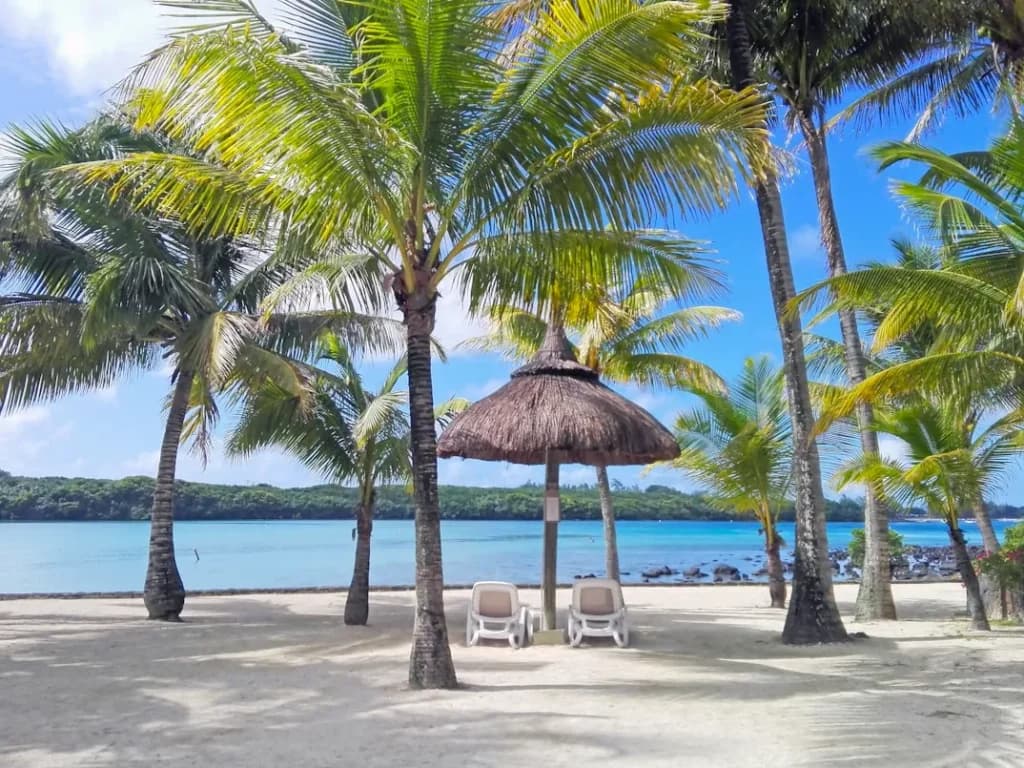
Mauritius has been a popular option for those who want to retire to Mauritius from the UK and live comfortably. With its resilient economy, tropical climate and pleasant lifestyle, Mauritius…

How personal income tax works in Mauritius — the 2026/27 rates and bands, tax residency, the remittance basis for foreign income, and the taxes the island does not charge.
Free 60-second tool
Ready to take the next step?
Find the Mauritius residency, retirement or work permit that fits you — with an indicative cost — in about a minute.
Get in touch
Speak to an adviser
Tell us where you are and where you want to be. We'll set out the cleanest route — honestly, and with realistic timelines.