Mauritius Retirement Visa
Retire to Mauritius on the 10-year retirement visa — eligibility (age 50+), the USD 2,000/month route, tax benefits and full relocation support from TBI Mauritius.
We are a relocation and immigration consultancy and we help foreigners retire in Mauritius, whether through the Mauritius retirement visa or another suitable residency pathway.
To get a Mauritius retirement visa, applicants must be at least 50 years old and show either a monthly income of USD 2,000 or savings of USD 24,000. This covers the main applicant and any dependants. The permit, known officially as the Retired Non-Citizen Residence Permit, lasts 10 years, is renewable, and after 5 years holders can apply for a 20 year permit. There is no minimum stay requirement, so it works well as a second residency for foreigners who want flexibility without committing to full time relocation.
Here at TBI Mauritius, we have over 13 years of experience helping foreigners relocate and retire in Mauritius. Our team guides you through the full retirement visa application, from verifying bank statements to preparing and submitting all required paperwork to the Economic Development Board (EDB). While it is possible to apply directly, the EDB has strict standards around document format and presentation, and applications from abroad are often delayed when requirements are not met precisely. We make sure everything is in order before submission, and we bring in reliable partners for other relocation matters when needed.
Mauritius Retirement Visa Benefits
No minimum stay requirement. One of the most practical advantages of the Mauritius retirement visa is that there is no minimum stay requirement, making it a realistic second residency option for foreigners who split their time between countries.
Remote work is permitted. Holders can work for foreign employers or clients while living in Mauritius, without needing an additional work permit.
Right to invest in Mauritius. Holders of the retirement visa can invest in Mauritius based businesses, provided they do not draw a salary or employment benefits from those businesses.
Pathway to a 20 year permit. After 5 years on the retirement permit and having transferred at least USD 200,000 to Mauritius during that period, holders become eligible to apply for a 20 year long stay permit. Funds can be brought in as monthly, quarterly, or lump sum payments, giving holders flexibility in how they meet this requirement.
Quality of life. Mauritius has a highly regarded private healthcare system, a low crime rate, a stable political environment, and a well established expat community. English is widely spoken and the cost of living, while not the cheapest in the region, is reasonable relative to the lifestyle on offer.
Eligibility and Financial Requirements
Age. Applicants must be at least 50 years old.
Income or savings. Applicants must show either a monthly income of USD 2,000 or savings of USD 24,000 in a bank account in their country of residence.
Opening a local bank account. Once the permit is issued, holders must transfer at least USD 2,000 into a Mauritian bank account within 60 days. This is a mandatory requirement.
Ongoing transfer obligation. Holders must continue transferring either USD 2,000 per month or USD 24,000 per year into their Mauritian bank account for the duration of the permit.
Key Facts at a Glance
- Minimum age: 50 years
- Income requirement: USD 2,000 a month or USD 24,000 in savings
- Permit validity: 10 years, renewable
- Application fee: USD 1,000 for the main applicant and USD 400 per dependant
- Minimum stay: none
- Remote work: permitted
- Processing time: 3 to 6 weeks
- Permanent residence: 20 year permit after 5 years plus USD 200,000 transferred
How to Apply for the Mauritius Retirement Visa
Step 1: Submit your application online. The application is submitted through the EDB online portal. We prepare and review all your documents, anticipating any potential issues and ensuring everything meets the EDB requirements before submission. We time the application carefully around your planned arrival date, so the 90 day travel window works in your favour and your application stays valid throughout the process. We also verify the documents of your dependants.
Step 2: Wait for approval in principle. Processing typically takes 3 to 6 weeks. Once successful, the EDB issues an approval in principle. We keep you updated throughout and handle any follow up queries from the EDB on your behalf.
Step 3: Travel to Mauritius within 90 days. Once you receive approval in principle, you must travel to Mauritius within 90 days. We help you plan your travel and arrival, and can assist with accommodation arrangements for your visit.
Step 4: Upload updated documents. Before your appointment, updated documents including a recent medical report, bank statements, and visa stamp must be uploaded to the EDB portal. We manage this step for you, including arranging a medical appointment, and make sure everything is in order.
Step 5: Attend your EDB appointment. We accompany you to your appointment at the EDB office, where your original documents are verified. Once completed, your 10 year retirement permit is issued. We also assist with your dependants application at the EDB.
Cost of the Mauritius Retirement Visa
The EDB application fee is USD 1,000 for the main applicant and USD 400 for each dependant. On top of the fee, you must meet the financial requirement by transferring USD 2,000 a month or USD 24,000 a year into a Mauritian bank account. You should also budget for supporting costs such as your police clearance certificate, medical report, and document preparation, which vary by country. We give you a clear breakdown of the full cost before you commit.
Living in Mauritius as a Retiree
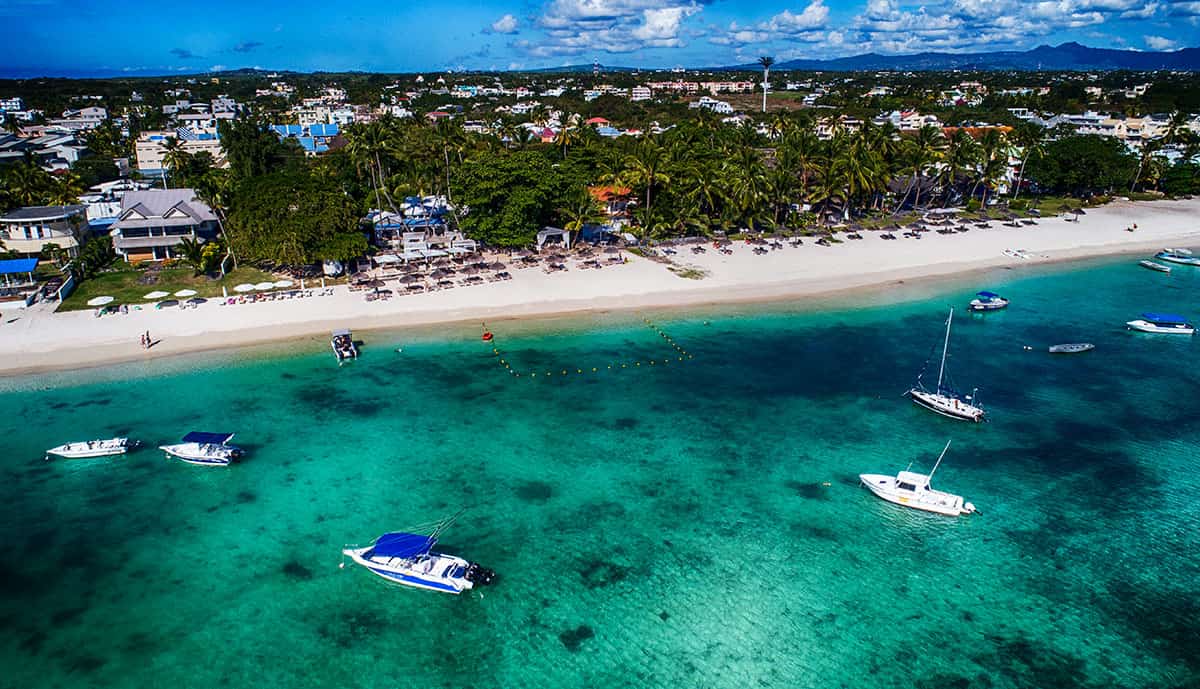
Mauritius is one of the most popular places to retire in the region. Retirees benefit from a warm climate, modern healthcare, a safe and stable environment, and a bilingual English and French community. Many retirees choose to buy a home through residence by property investment or explore the wider lifestyle on our living in Mauritius and moving to Mauritius guides.
Best Places to Retire in Mauritius
Where you choose to live shapes your retirement in Mauritius. The north and west coasts are the most popular with foreigners for their amenities, beaches, and easy access to private healthcare, while the central plateau and the quieter south suit those who want cooler weather, lower costs, or a slower pace. Popular areas to retire in Mauritius include:
- Grand Baie (north). The most cosmopolitan area, with a large expat community, restaurants, shopping, and clinics nearby. Higher cost, very social.
- Tamarin and Black River (west). A relaxed coastal lifestyle with a drier climate, popular with active retirees and outdoor lovers.
- Flic en Flac (west). A long sandy beach, a strong French speaking community, and better value than the north.
- Moka (central). Cooler and quieter, close to Wellkin Hospital and good amenities, favoured by those who prefer an inland base.
- Mahebourg and the southeast. Peaceful, rural, and the lowest cost, ideal for retirees seeking calm and authenticity.
For a fuller breakdown of each area, see our guide to the best areas to live in Mauritius.
Retiring in Mauritius as a South African
Mauritius is one of the most popular places for South Africans to retire. It sits a short direct flight of around four hours from Johannesburg, shares a similar time zone, and has a large, well established South African community. The same Mauritius retirement visa rules apply: you must be at least 50 and show a monthly income of USD 2,000 or savings of USD 24,000.
- There is a double taxation agreement between Mauritius and South Africa, which can affect how your pension and income are taxed. See our Mauritius tax guide and take specific tax advice.
- Transfers of funds from South Africa should be planned with your bank and tax adviser, as foreign transfer allowances apply.
- Check whether your existing South African medical aid extends to Mauritius, or arrange private health insurance before you arrive.
We help many South African retirees move to Mauritius each year. Learn more about relocating to Mauritius.
Free 60-second tool
Not sure which route fits you?
Answer a few quick questions and get your recommended permit — with an indicative cost — instantly. No obligation.
How TBI Mauritius helps
Relocation & Concierge
From permit applications to schools, banking, accommodation, insurance, and concierge support, we handle every aspect of your move to Mauritius.
Learn moreProperty
We connect you with trusted agents and developers, assist with identifying opportunities, and navigate the full purchase process through our sister company Oakbridge Mauritius.
Learn moreCompany Formation & Structuring
From domestic companies to GBCs and complex multi-jurisdictional structures, we advise on the right setup and work with top service providers on the island.
Learn moreOther Services
Document certification, Commissioner for Oaths, board representation, and ad-hoc support for almost any role you need covered in Mauritius.
Learn moreFill out the form below or email us at contact@tbimauritius.com and we will arrange a call to understand your situation and explain how we can help.
Frequently asked
What documents do I need for the Mauritius retirement visa?
The main documents required are a valid passport, birth certificate, police clearance certificate from every country you have lived in over the past 10 years, bank statements, proof of health insurance, and a medical report. The EDB may request additional documents depending on your profile.
How much does the Mauritius retirement visa cost?
The EDB application fee is USD 1,000 for the main applicant and USD 400 per dependant. You also need to meet the transfer requirement of USD 2,000 a month or USD 24,000 a year, and budget for supporting documents such as police clearance and a medical report.
Can I apply for the Mauritius retirement visa without visiting Mauritius first?
Yes. The initial application is submitted entirely online through the EDB portal. Once you receive approval in principle, you must travel to Mauritius within 90 days to attend an EDB appointment where your documents are verified and your permit is issued.
Does the Mauritius retirement visa lead to permanent residence?
Yes. After 5 years on the retirement permit, and having transferred at least USD 200,000 to Mauritius during that period, you can apply for a 20 year Permanent Residence Permit.
Do I pay tax in Mauritius on my foreign pension or income?
If you spend fewer than 183 days per year in Mauritius you are not considered a tax resident, and your foreign income and investment earnings are not taxed in Mauritius, provided they are not remitted to or used there. If you do become tax resident, Mauritius has double taxation agreements that may apply depending on your home country. See our Mauritius tax guide, and seek specific tax advice before relocating.
What happens if I miss a monthly transfer to my Mauritian bank account?
The transfer does not need to be made monthly. It can be done monthly, quarterly, or in instalments, as long as a total of USD 24,000 is transferred by the anniversary of your permit each year.
Can I include my spouse and children on the Mauritius retirement visa?
Yes. Spouses and dependent children can be included at a fee of USD 400 per dependant. Dependent children up to 24 years can be added as long as they are not married or working.
Can I switch from the retirement visa to another permit?
Yes. Retirement visa holders can apply for an occupation permit if they wish to work for or actively invest in a Mauritian business. The two permits cannot be held at the same time and the switch involves a formal application. We can advise on the best pathway for your plans.
Is there another way to retire in Mauritius?
Yes. Foreigners aged 50 and above can also retire in Mauritius by buying a qualifying home, including purpose built Property Development Schemes for Senior Living. Buying property in an approved scheme can grant residence in its own right. See residence by investment and our guide to investing in Mauritius real estate.
How much money do I need to retire in Mauritius?
To qualify for the Mauritius retirement visa you need a monthly income of USD 2,000 or savings of USD 24,000, and you must transfer USD 2,000 a month or USD 24,000 a year into a Mauritian bank account. Beyond the visa, a comfortable retirement in Mauritius is realistic on a moderate budget, though costs are higher in the north and west than inland or in the south.
Is Mauritius a good place to retire?
Mauritius is consistently ranked among the safest countries in Africa and scores highly in global retirement rankings. Retirees are drawn by the warm climate, modern private healthcare, an attractive tax regime, a bilingual English and French community, and no minimum stay requirement, which makes it easy to combine with time in your home country.
Can I retire in Mauritius from the UK, US, or South Africa?
Yes. The Mauritius retirement visa is open to foreigners of any nationality, including applicants from the UK, the US, South Africa, and the rest of Europe. The age and financial requirements are the same for everyone, and the application can be submitted online to the EDB before you travel.
What our clients say
“Philip and his team have been excellent throughout our application for a retirement visa. They guided us through every aspect of the process and even looked after us personally when we were in Mauritius with our medical, banking and immigration visits. We found them very friendly, experienced and knowledgeable.”
“TBI does outstanding work and coordinates well on all issues related to property acquisition. Philip has strong ties with local agents, financial institutions and legal experts which makes the process smooth and easy. I really enjoyed working with TBI.”
“I am incredibly satisfied with the service TBI Mauritius provided. They truly “do what they say they will do,” and their professionalism, reliability and expertise make them a standout choice for anyone planning a move to Mauritius.”
“We reached out to TBI once we had decided to move to Mauritius. It has been invaluable to have Philip's knowledge and advice. Nastasia took us to our meetings at the EDB — she has an excellent relationship with them and getting our permits was a great experience. I highly recommend TBI for all your relocation needs.”
“I contacted TBI for the Mauritius Retirement Non-Citizen visa. Philip was in regular touch throughout the entire process. It took longer due to strict documentation requirements, but we finally got through. The company was very professional in their approach.”
Your Mauritius story starts here.
Explore related services
Mauritius Residency
Every route to living in Mauritius in one place — by occupation, investment, retirement or property — and the path to permanent residence.
Explore RelocationRetire to Mauritius from the UK – A Guide for UK Citizens
Mauritius has been a popular option for those who want to retire to Mauritius from the UK and live comfortably. With its resilient economy, tropical climate and pleasant lifestyle, Mauritius…
Explore RelocationCost of Living in Mauritius (2026): A Guide for Foreigners
Rent, groceries, utilities, healthcare and schools — what it actually costs to live comfortably in Mauritius in 2026, with sample monthly budgets.
Explore RelocationHealthcare in Mauritius: Public, Private & Insurance
Healthcare is a key concern for anyone coming to live in or visit Mauritius. The country offers a mix of public and private healthcare services, ensuring a variety of medical care options. For those…
Explore
Get in touch
Speak to an adviser
Tell us where you are and where you want to be. We'll set out the cleanest route — honestly, and with realistic timelines.